

Batch and semi‑continuous cream cheese production both suit Australian micro‑dairies, but they support very different ways of working and growing. The right choice depends on how much cream cheese you plan to make, how steady demand is, and how far you want to move beyond a classic batch “homemade cream cheese” style process into more structured commercial production.
Understanding Cream Cheese Production Paths
Many micro‑dairies start by making their own cream cheese in small kettles, not much different from a scaled‑up homemade cream cheese method with milk, cream, starter culture, and a simple ingredients list. This batch approach lets you review recipe ideas, adjust flavor with lemon juice, white vinegar, or yogurt, and experiment with other cheeses without major investment. As orders grow and cream cheese becomes more than a sideline, semi‑continuous options such as heat exchangers and in‑line cooling help you move beyond the limits of a single pot or heavy bottomed saucepan.

Typical Cream Cheese Process in Micro‑Dairies
Cream cheese starts with whole milk or a blend of milk and cream that is heated, cultured, and turned into soft curds which are then mixed into a smooth spread. At home this might happen in a heavy bottomed saucepan on medium high heat, but in a micro‑dairy it usually involves a pasteuriser and a cheese making kettle instead of a simple pot on a stove.
The basic steps are similar whether you produce a small bowl of homemade cream cheese or a large batch for commercial production. You warm the milk and cream to pasteurise, often to a gentle simmer rather than a full boil, to protect the final creamy texture. You then cool to a set temperature and add starter culture and possibly a little rennet so the mixture can form curds slowly and develop a mild, sweet yet tangy taste, and you may add acid with lemon juice or vinegar to help create smaller curds that drain well but still give a soft, spreadable texture before draining the curds and blending them smooth.
Batch Production as a Scaled‑Up Home Method
In a batch setup, each cream cheese run is treated like a large recipe prepared in a single kettle or a small group of kettles. You add milk, cream, starter culture, and salt to one vessel, heat, cool, form curds, drain whey, and then blend everything until creamy before you store it in an airtight container in the fridge.
For a micro‑dairy, this feels very similar to filling a large bowl instead of a small one, then moving curds through a fine mesh strainer or cheesecloth‑lined plastic bag to drain excess whey. Once drained, the curds go into a mixer or food processor where you add salt, adjust taste, and blend to a smooth, creamy texture that spreads easily on bread, works in baking, and stirs into sauces or smoothies. The process remains hands‑on and craft‑driven, and it is easy to tweak recipes, for example by adding garlic or herbs, changing fat levels, or testing lactose free milk.
Limitations of Batch Systems for Growing Volumes
Batch systems begin to strain when daily cream cheese demand grows beyond what staff can handle with repeated heating, cooling, and manual draining. Each batch still feels a bit like making your own cream cheese in a big pot, just with more cleaning, more bowls, and more timing to manage, and this is often when cream cheese grainy issues or uneven texture appear.
As you repeat the full cycle several times a day, from heating the mixture to a gentle simmer, forming curds, then cooling, the energy and labour load climbs. Handling heavy bags of curds and whey by hand, squeezing them over a bowl or pot, is tiring and can lead to inconsistent texture, with smaller curds in some parts and larger curds in others. Any inaccurate timing or uneven heating can leave the cream cheese slightly grainy instead of smooth, especially when acids like lemon juice, distilled white vinegar, or white vinegar are added too quickly or at the wrong temperature.
Semi‑Continuous Production as a Practical Next Step
Semi‑continuous production combines batch steps like culturing and draining with continuous steps like in‑line heating or cooling. You still prepare defined batches, but you move them through parts of the process in a smoother flow, instead of stopping and starting like a single pot on a stove.
In practice, you might ferment milk and cream in kettles, then send the warm mixture through a Double Pipe Heat Exchanger where gentle heat or chilled water adjusts temperature as it flows. Pumps move the mixture into another vessel where you stir, blend, and adjust the final texture, while cooling is handled in line rather than in a static pot. This approach reduces dependence on manual stirring and squeezing, shortens time in the “danger zone” temperatures, and helps you deliver a consistent, creamy, spreadable texture batch after batch.

Role of a Double Pipe Heat Exchanger in Cream Cheese
A Double Pipe Heat Exchanger works like a controlled version of placing your pot in an ice bath or over gentle heat, but with product moving through a pair of pipes instead of sitting still. One pipe carries the cream cheese mixture, while the other carries hot water or chilled water, allowing you to adjust temperature without harsh shocks that could make cream cheese grainy or uneven.
For micro‑dairies shifting from pure batch to semi‑continuous, this helps you cool or heat the mixture to the right point to form curds or protect the final creamy texture. It lowers the risk of inaccurate timing during heating and cooling, which often causes grainy, lumpy, or too soft textures that do not spread smoothly or hold up in baking. It also makes it easier to integrate future steps such as flavour additions, so you can produce garlic cream cheese, sweet vanilla spreads, or variants designed for bread, sauces, or pancakes without changing the core heating and cooling setup.
Comparison of Batch and Semi‑Continuous Setups
Both batch and semi‑continuous setups rely on the same core ingredients: milk, cream, starter culture, and salt, but they differ in how these elements move through heat and time. Batch lines feel closer to a scaled‑up home recipe that might use lemon juice or vinegar to add acid and form curds, while semi‑continuous lines focus more on stable flow, accurate temperatures, and less manual handling.
In a batch cream cheese line, the equipment feels like a larger version of a heavy bottomed saucepan, large bowl, fine mesh strainer, and cheesecloth. You tend to have more hands‑on stirring, cutting curds, squeezing cloth, and draining whey, and texture control is sensitive to timing, heat, and manual mixing, so mistakes can lead to cream cheese grainy issues or uneven fat distribution. In a semi‑continuous cream cheese line, the equipment feels more like a gentle pipeline with kettles, pumps, and a heat exchanger; manual squeezing is replaced by controlled flow, heating and cooling are more stable, and once recipes are set, this approach provides more reliable texture for spreadable cheese used in food service, baking, or smooth sauces.
CheeseKettle Equipment for Batch Cream Cheese Lines
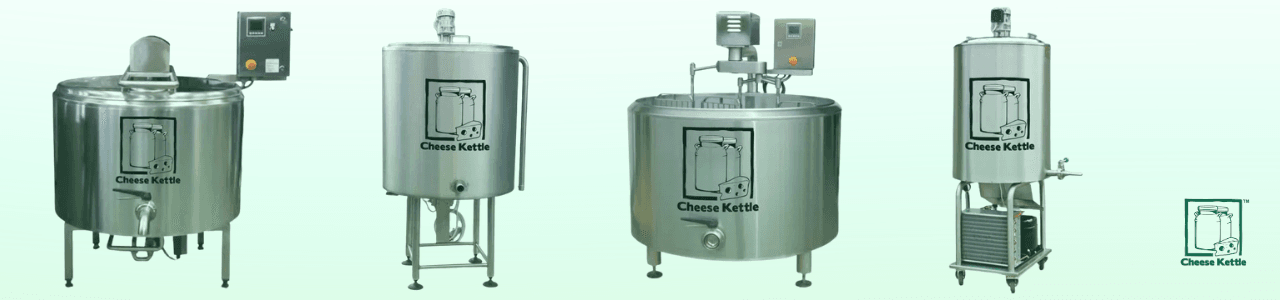
For batch lines, CheeseKettle equipment mirrors the steps of a home recipe while giving you safer, more reliable control overheat, timing, and texture. Instead of a simple pot on a stove, you use a pasteuriser and a cheese vat that heat evenly and hold temperature without constant stirring, which helps protect both flavour and structure.
Smaller plants often begin with a 50 Ltr Pasteurizer for Milk for trial runs when they first move beyond homemade cream cheese and want to compare their own cream cheese with store bought cream cheese. As demand increases, a 100 Ltr Milk Pasteuriser with Chiller and a 200 Ltr Milk Pasteurizer paired with a 200 Ltr Cheese Making Kettle Vat support full‑day runs and consistent, rich, spreadable product suitable for bread, baking, and sauces. When it is time to form curds and drain whey, curd handling tools such as a cheese harp help cut evenly, lowering the risk of smaller curds in one part of the vat and larger curds in another, which can otherwise lead to uneven texture and patches of grainy or overly soft cream cheese.
Preparing Batch Setups for Semi‑Continuous Upgrades
If you’re not ready to fully commit to semi‑continuous production, you can still choose equipment and layouts that make the transition easier later. Think of it as moving from mixing in a single bowl to using a large bowl plus a food processor, without throwing away your original recipe or losing the familiar taste.
Standardising batch sizes in 100 L or 200 L ranges helps you later match them to a Double Pipe Heat Exchanger capacity without rebuilding the whole line. Planning pipework with space for pumps and valves means that when you are ready, you can move your mixture through pipes instead of carrying it in plastic bag‑lined buckets or open bowls. Training staff to record times and temperatures carefully, and to review recipe timing when texture drifts, builds habits that prevent inaccurate timing and support smooth integration of more automated heating and cooling.
Pasteuriser Selection for Australian Micro‑Dairies
Pasteurisers sit at the heart of both batch and semi‑continuous lines, replacing the home cook’s pot and gentle simmer with controlled, even heat. For Australian micro‑dairies, the key is matching pasteuriser size and features with realistic cream cheese volumes, power availability, and the wider mix of foods you plan to produce.
A 50 L unit may be enough for product testing or small farm‑gate sales, while 100 L or 200 L units are better suited to regular commercial production where cream cheese shares space with other cheeses, ricotta, or yogurt. Integrated cooling helps you move quickly from heat to safe culturing temperatures, which matters when you rely on starter culture, lemon juice, or vinegar to add acid and form curds at the right stage. If you plan to diversify into other cheeses and dairy foods, a flexible pasteuriser gives you more options without buying multiple pots or kettles, and it supports careful control overheat so you avoid boiling, protect flavour, and maintain a soft, spreadable texture.
Influence of Ingredients and Recipes on Texture and Flavour
Even in a commercial setting, many of the same choices that affect homemade cream cheese also shape large‑scale results. Using lactose free milk, changing the ratio of cream to milk, or swapping lemon juice for distilled white vinegar all influence flavour, tangy notes, and texture, and these decisions need to be built into your standard recipes.
Using lactose free milk can broaden your customer base, but you may need to adjust starter culture choice and timing to achieve the same soft, creamy texture and gentle tang. The balance of cream and whole milk influences fat levels, which in turn affects how rich, smooth, and spreadable your cream cheese feels, whether customers eat it with bread, use it in baking, or stir it into sauces, smoothies, and other foods. Acid sources such as lemon juice, distilled white vinegar, or white vinegar must be added at controlled times; adding acid too quickly or at the wrong temperature can create smaller curds that feel slightly grainy instead of silky, and it can change how sweet or tangy the final cheese tastes.

CheeseKettle’s Role in Your Cream Cheese Roadmap
Whether you want to refine an existing batch line or plan a semi‑continuous setup, it helps to think like a careful home cook who is scaling up. You still focus on good milk, clean heat, accurate timing, and simple steps such as add acid, add salt, drain, mix, and store, but kettles, pasteurisers, and heat exchangers replace the stove, pot, and fine mesh strainer on your bench and give you repeatability.
If you’re ready to take the next step, CheeseKettle can help match pasteurisers, cheese vats, and Double Pipe Heat Exchangers to your cream cheese goals. Together we can design a process that keeps your product fresh, creamy, tangy, and delicious, whether you are replacing store bought cream cheese for your local customers or building a reliable line that supports other cheeses and dairy foods in your range, while still being simple enough that anyone reading your recipe notes can follow the steps without needing to comment something about jargons or confusing instructions.