
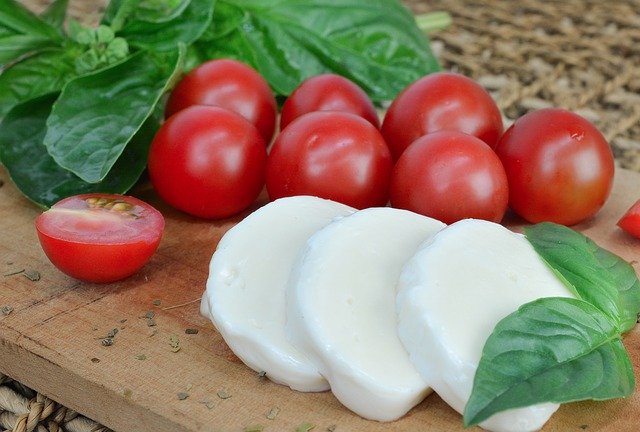
Do you love mozzarella? Do you wish you could eat it every day? Why don’t you try making homemade mozzarella? Well, if you don’t know how to make this delicious cheese, then you’ve come to the right place. Here, we’ll give you the step by step procedure on how to make this amazing cheese.
First of all, before you start creating this cheese, you will need to prepare the necessary ingredients and equipment. Don’t worry, there’s no need for you to buy a cheese vat, milk pasteuriser or any of the dairy processing equipment that most mozzarella manufacturers use.
Equipment
- Large non-reactive pot
- Measuring cups and spoons
- Cheese curd cutter
- Microwaveable bowl
- 2 bowls
- Skimmer
- Rubber gloves
- Strainer
Ingredients
- 1 ¼ cup water
- 1 ½ teaspoon citric acid
- ¼ rennet tablet or ¼ teaspoon liquid renned
- 4 litres whole milk
- 1 teaspoon kosher salt
Procedure
1. Set up the Citric Acid and Rennet. In the first bowl, mix 1 cup of water and the citrus extract. Make sure to mix until it’s completely dissolved. In the 2nd bowl, mix the rennet tablet or liquid with 1/4 cup of water in a different bowl. Make sure that it’s dissolved thoroughly before proceeding to the next step.
2. Put the milk in your non-reactive pot. Turn on the stove and adjust it to medium-high heat. Stir the milk gently.
3. Once the milk reaches 32°C. Turn off the heat and add the rennet solution. Continue stirring gently while counting to 30. After which stop stirring and cover the pot with the lid. Let the mixture sit undisturbed for about 5 minutes.
4. Once 5 minutes are over and the milk has set, you’ll notice that it will look and feel like soft silken tofu. If it’s not, cover the pot again and allow the mixture to sit for another 5 minutes. Once it has become soft and silky, cut it in uniform sized curds horizontally and vertically – creating a grid like pattern. Make sure that you cut the curd all the way to the bottom of the pot.
5. Turn the stove on medium heat and stir slowly to allow the curds to reach 40°C. Make sure not to break the curds too much. As you continuously stir, the curds will clump together and eventually become separated from the yellow whey.
6. Put out the fire and continue stirring gently.
7. Transfer the curds into your microwavable bowl using a skimmer to separate it completely from the yellow whey.
8. In a large pot, put water and heat it to about 88°C.
9. Pour the curds on to your strainer and place it into the pot so that the curds are submerged in hot water. Allow it to sit for about 5 minutes.
10. Wear your gloves and fold the curds under the water and check their internal temperature until it reaches 57°C.
11. Once the desired temperature (57°C) has been reached, lift it out of the water.
12. Sprinkle a little kosher salt over the cheese and squish it with your fingers to combine. Repeatedly stretch and fold the cheese using both your hands until it tightens and become firm and has a glossy surface. Then shape them into balls. Bear in mind not to over-fold and stretch the homemade mozzarella.
13. Remember that homemade mozzarella has a short shelf life. Put it in a sealed container, together with a mixture of kosher salt and 1 cup of cool whey. And then store it inside your refrigerator in a place that’s noticeable.
If you want to know more about making homemade mozzarella or homemade cheese, please feel to browse through our website.
Cheese Kettle is a trusted supplier of dairy equipment in Australia. If you are looking for great advice about cheese making or if you want to start a cheese making business, talk to us. We will provide you with the best information and dairy processing equipment for cheese making.