

Keeping whey loss under control is one of the fastest ways for small dairies to lift cottage cheese yield without changing milk supply. By focusing on curd size, gentle stirring and consistent medium heat, you can retain more protein and fat and produce curds with a creamy texture and mild flavor. With the right process and equipment, these improvements are repeatable from batch to batch, whether you make homemade cottage cheese or commercial dairy products.
Importance of Whey Loss Control in Small Dairies
For small facilities, even a small amount of improvement in yield can be meaningful when working with limited daily milk volumes. Whey loss carries away solids such as protein, fat and vitamins that could have stayed in the curds and improved the nutrition of your cottage cheese. Because fixed costs such as labour, energy and cleaning are already committed, lower whey loss improves margin per serving without adding extra complexity.
Excessive whey loss can also affect texture and flavour, leading to a drier curd and less creamy cottage cheese that customers notice quickly. In cottage cheese, where curds form the heart of the product, controlling fines and butterfat loss is essential to maintaining a consistent creamy texture and mild flavor. For Australian artisan makers, this consistency is crucial for building demand for fresh dairy products, whether people enjoy them at breakfast, as a high protein snack or in fruit smoothies.

Common Process Factors Behind Whey Loss
The most common cause of unnecessary whey loss in cottage cheese is a mismatch between curd cut size and stirring intensity. When curds are cut too small or unevenly, they break down more easily, especially when stirring occasionally during heating, creating fines that escape into the whey. Over-agitation, particularly during cooking and post-cut stirring stages, then breaks the curds further and carries them into the liquid.
Temperature changes during the healing and cooking stages can also weaken curd structure. If the vat heats unevenly or reaches a boil in one area, some curds may be over-firm while others remain soft, leading to fragments breaking off when you stir the mixture. Finally, rushed whey drainage, such as opening outlets too early or draining too fast through a colander or cheesecloth, can physically pull curds along with the liquid and waste valuable nutrients.
Role of Consistent Curd Cutting
Using repeatable cut sizes is one of the most effective levers for reducing fines and whey loss in cottage cheese. When curds are cut into uniform cubes, they heal and firm up at a more consistent rate, which makes them less likely to fragment under gentle stirring and medium heat. This allows you to optimise agitation and temperature knowing your curds will respond predictably and give a creamy, soft texture.
A dedicated Cheese Harp, custom-made to your vat dimensions and wire spacing, helps achieve this consistency in a small facility. By standardising both the direction of cuts and the spacing between wires, the harp ensures a more regular curd size with each batch, supporting consistent moisture content and reduced fines in the whey. For cottage cheese or ricotta cheese styles, choosing a curd size and sticking with it across recipes is central to building a reliable process and making dairy products that differ only where you intend them to.
Impact of Agitation Intensity on Whey Loss
Agitation is essential for even cooking and preventing curds from matting, but too much movement quickly creates fines. Over-agitation, especially early in the cooking phase before curds are firm, breaks edges and corners off curd cubes, sending small particles into the whey that cannot be recovered. In small dairies, where vats may be hand-stirred in a bowl or run at fixed speeds, this risk is particularly high.
The goal is to use the minimal stirring necessary to maintain uniform temperature and prevent clumping while respecting curd integrity. Variable-speed agitators, such as those available on the 200 Ltr Cheese Making Kettle Vat, make this easier by allowing gentle speeds during sensitive stages and slightly higher speeds only once curds have firmed. This reduces mechanical stress on curds without compromising mixing and supports a creamy, soft texture in the finished cheese.
Importance of Temperature Control for Curd Integrity
Stable and even temperature profiles throughout the cheese make are central to strong, resilient cottage cheese curds. If the vat exhibits hot or cool spots, some curds may over-firm while others remain soft, leading to differential shrinkage and fragmentation during stirring. Carefully controlled medium heat helps curds form with uniform firmness, reducing fines formation as the process continues.
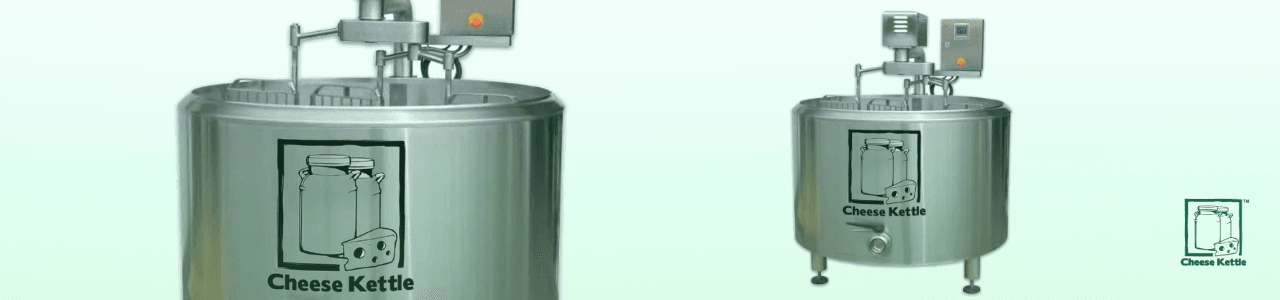
The 200 Ltr Cheese Making Kettle Vat is designed with a jacketed heating system and precise controls, providing even heat distribution in medium-scale operations. Its ability to manage both heating and cooling cycles in the same vessel simplifies process control for small dairies, helping you follow target temperature ramps for cottage cheese. This supports consistent curd size, texture and lower whey loss whether you are making low fat cottage cheese, richer cream-style cottage cheese or similar fresh cheese products.
Influence of Ingredients and Acidity on Curds and Whey
Beyond handling, the way you set acidity also affects how curds form and behave. In cottage cheese, citric acid, lemon juice or vinegar may be used to help milk curdle, but too much acidity or rapid addition can create fragile curds that break easily and increase whey loss. Using a small amount of acid and stirring gently as the mixture thickens can produce curds with better structure and a creamy texture.
When making homemade cottage cheese, ricotta cheese or similar soft cheeses, be mindful of salt and cream additions, as they affect how fat and protein bind. Read product labels to understand sodium content and fat levels in milk and cream, especially if you want a diet-conscious or low-fat option. Pasteurized milk is standard for safety and federal regulations, but within that you can choose different fat levels and adjust recipes to manage flavour, nutrients and whey loss.
Value of Equipment Choices in Reducing Whey Loss
In small dairy facilities, choosing equipment that supports gentle, repeatable handling often yields more benefit than adding capacity. Tools that enable consistent curd size, careful agitation and precise medium heat directly influence the number of curds carried off in whey. By upgrading to purpose-built curd cutting and kettle systems, small producers can lock in process gains that are difficult to achieve with improvised tools such as general kitchen bowls or colanders.
CheeseKettle’s Cheese Harp and 200 Ltr Cheese Making Kettle Vat are designed to work together in this context. The harp provides consistent curd cutting tailored to your vat, while the kettle’s jacketed heating and variable agitation maintain gentle, uniform handling during cooking and stirring. When used as a system, they help small dairies reduce whey loss, lift yield and maintain cottage cheese with a creamy texture and mild flavor that suits breakfast, toast toppings or savoury meals with chives and spices.

Practical Process Adjustments for Small Facilities
For smaller operations, the most effective changes tend to be simple, repeatable adjustments that fit existing workflows. Standardising curd cut size with a Cheese Harp, defining agitation speeds by stage, and documenting temperature ramps can all be implemented without additional staff. Together, these changes reduce process variation and help employees reproduce low-whey-loss batches consistently, no matter who is on the shift.
It is also valuable to review whey clarity and yield data regularly. Tracking how changes in cut size, agitation or temperature affect whey appearance and final curd mass will help you refine your method over time. In many small facilities, a few iterative adjustments are enough to find a balance that retains more curds while maintaining the desired creamy texture and flavour that works across meals, from breakfast pancakes to savoury cottage cheese on bread.
Combined Benefits of the Cheese Harp and 200 Ltr Kettle Vat
The Cheese Harp is custom-made to fit your specific vat dimensions, ensuring that each pass yields uniform curd cubes with consistent moisture potential. This minimises the proportion of overly small curds that are prone to breaking and passing into whey, especially under agitation. With a fixed spacing suited to cottage cheese, your team can deliver the same cut profile for every batch, regardless of operator or recipe variation.
The 200 Ltr Cheese Making Kettle Vat complements this by providing steady, controlled heating through a jacketed system and an integrated agitator. The variable agitation capability is particularly valuable for cottage cheese, allowing you to keep movement gentle during cutting and early cooking, then moderate as curds firm up. Together, these tools embed best-practice handling into your process, making low-whey-loss production more achievable for small dairies and supporting a range of products from high protein cottage cheese to softer styles used in smoothies, fruit bowls and baked cakes.
Next Steps for Reducing Whey Loss in Your Dairy
If you are experiencing variable yields or noticing cloudy whey with visible curds, start by reviewing curd cutting and agitation routines. Measuring your current curd size, documenting agitation speeds, and checking temperature uniformity will reveal the main sources of whey loss. Small adjustments, backed by suitable equipment, typically deliver noticeable gains over a few production cycles and help you store more cheese in airtight containers rather than losing solids in liquid waste.
CheeseKettle can support you in tailoring this approach to your specific facility, milk profile and product mix. For many artisan and small commercial producers, introducing a Cheese Harp and a 200 Ltr Cheese Making Kettle Vat creates a reliable foundation for higher-yield cottage cheese, while preserving the handcrafted character of the product. Ready to reduce whey loss and stabilise your cottage cheese yields? Contact CheeseKettle today to discuss the Cheese Harp and 200 Ltr Cheese Making Kettle Vat for your small dairy facility.