
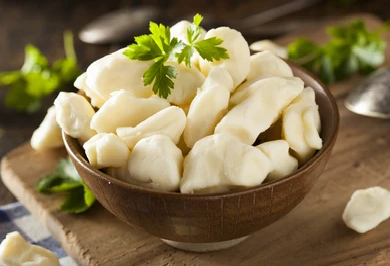
Making cheese curds is a straightforward way for beginners in Australia to try their hand at homemade cheese. Cheese curds are known for their unique squeaky texture and are a popular snack enjoyed fresh or as a key ingredient in the Canadian dish, poutine.
Why Cheese Curds Are a Great Starting Point
Cheese curds are a fresh form of cheddar, created during the cheese production process before the curds are pressed and aged. In Australia, cheese curds are gaining popularity, especially for those looking to recreate poutine cheese at home. Their mild, salty flavour and springy texture make them a delicious snack, and they’re also gluten free, making them suitable for a range of diets. Cheese curds can be enjoyed on their own, fried, or as a topping for potato chips or french fries with brown gravy.
Ingredients and Equipment for Cheese Curds
Ingredients
4 litres milk (preferably non-homogenised)
⅛ teaspoon Bioprox M265 mesophilic culture
½ teaspoon liquid rennet diluted in 2 tablespoons filtered water
1 tablespoon cheese salt
¼ teaspoon calcium chloride mixed with 2 tablespoons filtered water (use only with homogenised milk)
Equipment
Large pot
Thermometer
Curd knife or curd cutter
Slotted ladle
Colander
Cheese cloth or butter muslin
Cutting board
Step-by-Step Instructions
Remember to sterilise all equipment before starting.
Heat the milk to 31°C (88°F) on low heat or using a water bath.
Remove from heat and sprinkle the mesophilic culture over the milk. Wait 5 minutes for it to rehydrate.
Stir the milk gently in an up-and-down motion.
Cover and allow the milk to ripen for 45 minutes, keeping the temperature steady.
Add the rennet and stir well.
Let the milk set for 40 minutes, maintaining the temperature.
Check for a clean break, then cut the curds into ½-inch cubes.
Place the pot back on low heat and heat the curds to 38.9°C (102°F) over 30 minutes, stirring frequently. You’ll notice the curds shrink and separate from the whey.
Once at temperature, cover and maintain for another 30 minutes, stirring every 5 minutes to prevent matting.
Let the curds settle at the bottom.
Line a colander with cheese cloth. Place a bowl under the colander to catch the liquid whey. Pour the curds into the colander and let them drain for 10 minutes.
Pour the whey back into the pot and bring it to 38.9°C (102°F).
Remove the cheese cloth from under the curds. Place the colander of curds over the pot, cover, and keep at temperature for 10 minutes. The steam helps the curds form a slab.
Lower the temperature to 36.7°C and continue heating the curd slab for an hour, flipping every 15 minutes.
Transfer the slab to a cutting board and cut into strips, similar to french fries.
Add salt to the curd strips and mix well.
Return the curds to the colander and let them dry, uncovered, for 24 hours.
Serve the cheese curds immediately or store in the fridge for up to two weeks.
Cheese Curds Variations
Spicy Cheese Curds
After drying, sprinkle pepper flakes or dried chillies on the cheese curds for extra flavour.
Squeaky Cheese Curds
Squeaky cheese curds are best enjoyed fresh for their signature texture. They can be used as poutine cheese, topping hot fries or potato chips with brown gravy for homemade poutine. This dish, which originated in Quebec, Canada, is now enjoyed around the world, including in Australia.
Using Cheese Curds in Popular Dishes
Cheese curds are the main ingredient in poutine, a Canadian dish made with french fries, cheese curds topped in brown gravy. In Australia, poutine is becoming more common, with Pure Dairy cheese curds often used for their consistent quality. Fried cheese curds are another popular snack, made by coating curds in a simple batter of flour, salt, and water, then frying until golden.
Essential Equipment for Larger Production
For those interested in producing cheese curds at a larger scale, equipment such as Cheese Kettle’s cheese making kettle vats and milk pasteurisers are available. These tools help maintain consistent temperature, aid in curd formation, and streamline the process from milk to curds. Cheese Kettle also offers brine tanks, commercial cheese presses, and milk taxis for efficient production and storage.
Serving and Storing Cheese Curds
Cheese curds can be served fresh, fried, or as a topping for chips, fries, or salads. Store them in an airtight bag or container in the fridge. They are best enjoyed within two weeks for maximum freshness and texture.
Conclusion
Making cheese curds at home in Australia is a simple process that yields a fresh, delicious product. Whether you’re making a batch for snacking, for homemade poutine, or to enjoy the unique squeaky texture, cheese curds are a versatile addition to your kitchen. With the right milk, a few basic tools, and some patience, you can create cheese curds that rival those found in Canada or from Pure Dairy.
Discover our premium cheese kettles designed for efficient and consistent cheese production-visit our products page to view the full range of equipment.
Ready to Make Cheese Curds?
We offer equipment and advice for home and commercial cheese curd production. Whether you’re looking to make your first batch or expand your operation, we can help you get started with the right tools and support.