
Choose a milk tank that holds your planned collection, protects chilled milk from heat, supports easy cleaning and empties cleanly into your cheese room. For short-term milk storage, cooling capacity must match your milk temperature, holding time and required milk quality. The dairy equipment setup must also fit the limits in your food safety program.
Milk Tank Capacity Must Match Your Collection Cycle
Milk tank capacity should cover the largest amount you collect before emptying. Size the tank from your herd size, milking volume, collection frequency and the milk stored before cheesemaking.
Collection Pattern | What To Check |
|---|---|
One milking per trip | Working capacity covers that milking without overfilling |
Several milkings before transfer | Storage capacity covers the combined volume and cooling handles each addition |
Variable seasonal volume | Smaller loads still reach any fitted temperature sensor and outlet |
Confirm the loaded trailer and tow vehicle stay within their legal weight limits.
Milk Tank Cooling Must Match Transport and Holding Time
Milk tank insulation slows heat gain during transport, while active cooling systems control milk temperature during longer trips or holding periods. Choose the milk cooling setup from milk temperature at filling, travel time and the delay before processing. Food Standards Australia New Zealand’s Standard 4.2.4 dairy collection and transport guidance requires controls for time and temperature. Its dairy transport guidance says milk should generally stay at 5°C or below during transport unless an approved alternative applies.

Milk Tank Surfaces Must Be Easy to Clean and Inspect
Milk tank surfaces that touch milk must support good hygiene through easy cleaning, sanitising and draining. Smooth stainless steel tanks, accessible openings and a cleanable outlet reduce places where milk residue, fats and bacteria remain. Check these points before choosing a tank:
Inside stainless-steel surfaces are reachable by your cleaning method
The outlet and valve open for inspection and drain fully
Hoses, containers and fittings are included in your cleaning routine
The lid or manhole closes securely during transport
Cleaning water and sanitiser drain without pooling
Australian dairy transport guidance also requires transport equipment to protect milk from contamination, resist rust and provide cleanable surfaces where milk touches.

Milk Tank Outlets Must Suit Farm-To-Vat Transfer
Milk tank outlets should let you move milk into the cheese room without awkward lifting or repeated handling. Match the valve position and hose connection to your receiving vat, pump, other compatible dairy equipment and unloading area. Before buying, check:
The outlet is accessible in the normal unloading position.
The hose reaches the receiving point without sharp bends or low pockets.
The valve is accessible for cleaning after every transfer.
The tank drains as fully as your cleaning routine requires.
Milk Tank Checks Must Cover Collection and Delivery
Milk tank checks should include temperature monitoring at collection and delivery. This shows whether the insulated tank, cooling system and trip time provide consistent cooling performance and keep milk within your documented limits.
Use the same routine for each trip:
Check and record milk temperature before departure
Confirm lids, valves and hose caps are closed
Recheck temperature when milk enters the cheese room
Follow your food safety action if a temperature limit is missed
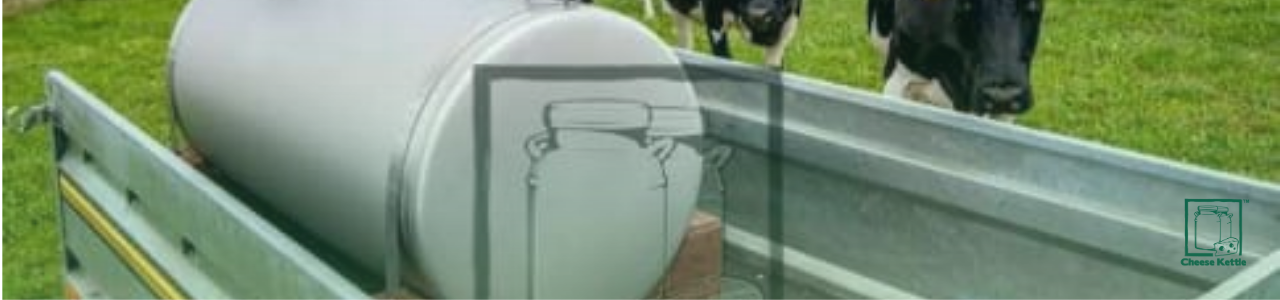
Our Cheese Kettle Mobile Milk Trailer Cistern for Safe Transport
We build the Cheese Kettle Mobile Milk Trailer Cistern to order for farms moving raw or pasteurised milk to a cheese room. Its insulated stainless-steel tank helps maintain chilled milk temperature, and optional chilling supports longer transport or short-term holding. Contact us to order a Mobile Milk Trailer Cistern sized to your milk volume, holding time and collection route.

Milk Tank Questions for On-Farm Cheesemaking
Milk tank questions for on-farm cheesemaking include raw-milk cooling limits and whether direct internal cleaning access is needed. Both depend on your dairy operation, milk process and cleaning method.
Raw Milk Cheese | Are the Cooling Rules Different?
Milk for raw milk cheese has specific Australian cooling and storage limits. It must reach no more than 6°C within two hours and stay at 5°C or below in storage, unless the allowed alternative applies.
Cleaning | Does A Transport Tank Need a Manhole?
A manhole is useful when your cleaning method needs direct access to the tank interior. With a built-in cleaning system, confirm every surface that touches milk is reached and the tank drains fully.