

Cheddar production at scale depends on precise temperature control at every stage, and jacketed industrial kettles are the backbone that makes this possible in a modern cheese plant. When you move beyond a small batch into a lot of litres of milk, even small temperature changes can affect moisture, flavour, texture, and yield in your cheddar cheese. The right kettle, with the right heating system and controls, turns temperature from a constant risk into a repeatable part of your process.
For Australian farmers and producers, this matters because customers expect consistent cheddar character, whether you are supplying a local shop or stocking supermarket shelves across Australia. Jacketed kettles with integrated temperature control help you hit pasteurisation targets, manage curd cooking ramps, and protect texture without constant manual intervention. In this guide, you will see how jacketed heating systems work, what temperature precision really means in cheddar production, and how CheeseKettle equipment can support you as you scale.
What Does Cheddar Production Look Like at Industrial Scale?
At industrial scale, cheddar production follows the same core steps as farmhouse cheese but with tighter control and higher volumes, often hundreds or thousands of litres of milk per batch. Milk is standardised, pasteurised, inoculated with starter culture, coagulated, cut, stirred, cooked, cheddared, milled, salted, pressed into blocks, and then matured under controlled temperature and humidity. Each part of the process becomes more sensitive to temperature because small errors are amplified across the large curd mass.
Larger factories in the dairy industry also rely on equipment that can support continuous workflows and meet food safety requirements, not just basic heating elements. This is why industrial plants use jacketed vats, automated stirrers, calibrated sensors, and clear specifications instead of simple pots and gas rings. The result is cheddar cheese that can be produced at scale while keeping a familiar flavour and texture from batch to batch.
Why is Temperature Control So Critical in Cheddar Making?
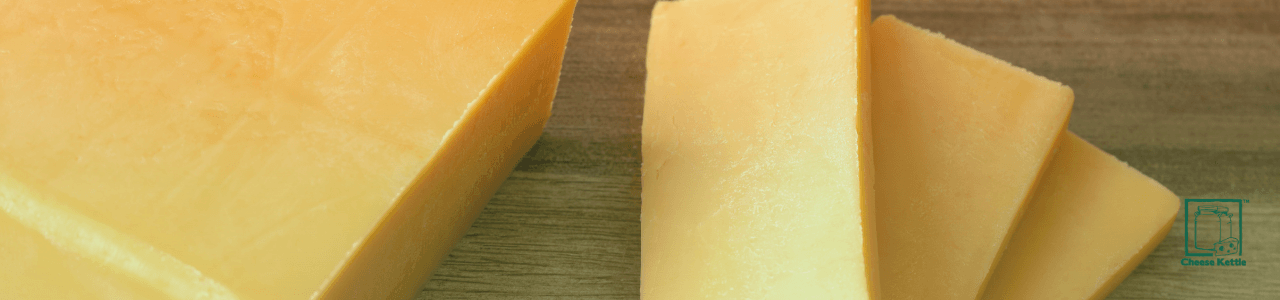
Cheddar is very sensitive to temperature because it shapes acid development, curd moisture, mouth feel, and the final flavour profile. During pasteurisation, milk is heated to a set temperature for a set time, and changes to this can have a direct effect on both food safety and how the curd behaves later. During curd cooking, the kettle is usually ramped from a mild warm start around culture temperature up into a higher heated range, which affects how much whey drains and how firm or soft the final cheese becomes.
If the curd is heated too hot or too fast, you risk a dry, crumbly body with lower yield and a sharper, sometimes unbalanced flavour. If it is heated too cool or too slowly, moisture and acid may remain too high, leading to a soft, pasty texture and a sweet note that does not sit well in mature cheddar. Ripening temperature later on also shapes how the flavour develops over months, from mild and creamy to rich and strong styles that many people in Australia and the UK enjoy.
How Do Jacketed Heating Systems in Cheese Kettles Work?
A jacketed kettle uses a double-wall construction where the inner vessel holds the milk or curd, and the surrounding “jacket” carries a heating or cooling medium such as hot water or steam. Heat passes through the vessel wall, providing even, gentle heating across the entire batch rather than concentrating intense heat on the bottom. This design greatly reduces hot spots, helps prevent scorching of curd and whey solids, and allows more accurate temperature control across larger volumes.
Modern jacketed kettles can be powered electrically, through hot water, or by steam, and they often include digital temperature controllers that allow you to set and hold specific temperatures over time. Many systems also integrate agitation or slow mechanical stirring to keep the curd moving, which improves heat distribution, protects texture, and supports an even result throughout the vat. This combination of design and control helps the kettle match the demands of both artisan cheesemakers and larger factories.
How Important is Temperature Precision in Industrial Cheese Kettles?
At industrial scale, temperature precision determines whether your process is truly repeatable across multiple shifts, operators, and sites. Steam or water jacketed kettles with accurate probes and controllers can keep temperature within a narrow band, ensuring each ramp happens as planned instead of changing from batch to batch. This consistency directly supports uniform moisture content, pH curves, and a reliable cheddar cheese flavour and texture.
Modern jacketed kettles are designed to hold precise temperatures up to well over typical pasteurisation levels, with controls that allow gentle changes rather than sudden spikes. This is especially important when cooking curds, where the goal is controlled heat movement through the whole curd mass, not just reaching a number on the display. Over months of production, this level of precision makes a clear difference to quality, stock reliability, and customer trust.

What Cheddar Temperature Profile Should You Expect from Pasteurisation to Ripening?
While every maker has their own words for it, most cheddar processes follow a familiar temperature journey from fresh milk to mature cheese. Milk is first pasteurised, then cooled to culture pitch temperature for the starter culture to begin its work. After setting, the curd is cut, stirred, and gradually heated into a higher range during cooking to allow whey to drain and the curd to firm up.
Once the whey is mostly removed, cheddaring begins, with curd slabs stacked and restacked to drive more whey out and develop the right body. The slabs are then cut into smaller pieces, salted, filled into moulds, and pressed into firm blocks that are strong enough to handle but still able to change over time. Finally, the blocks are stored in a cold room or fridge-like space for months, allowing the flavour to shift from mild and sweet towards a more rich, sharp, or even strong cheese depending on how long they are left.
How Do Jacketed Kettles Support Consistent Curd Cooking for Cheddar?
During the cooking or scalding step, your goal is to raise the curd temperature evenly and predictably so that each piece loses moisture at a controlled rate. Jacketed kettles support this by spreading heat through the jacket along both the sides and base of the vessel, reducing temperature differences that can create uneven curd. With steady stirring, this allows gentle ramps from culture temperature into the cooking range without hot spots or sudden changes.
If the vat heats too aggressively from the bottom, curd near the base can overcook and toughen, while curd near the top stays soft and under-cooked. Even heating from a jacket, supported by clear controls and slow agitation, allows you to focus on cutting patterns, stirring times, and pH checks instead of fighting temperature swings. The result is a more even texture in the mouth, fewer defects, and better control over how the cheese will mature over its life in the store or fridge.
Which CheeseKettle Equipment Supports Cheddar Production at Scale?
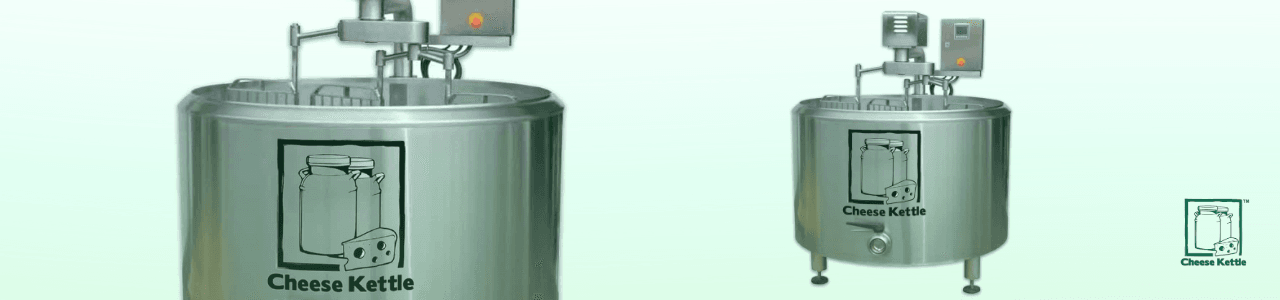
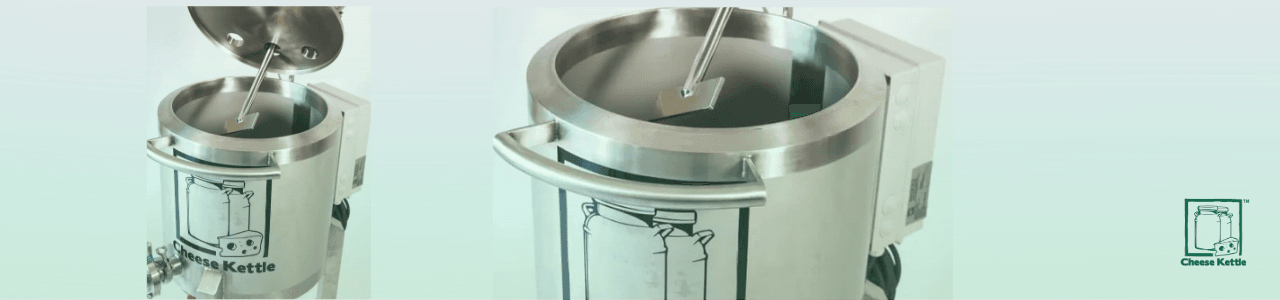
For Australian makers scaling cheddar production, CheeseKettle offers vats built around jacketed heating and precise temperature control. The 200 Ltr Cheese Making Kettle Vat is made from food-grade stainless steel, features a jacketed heating system for even temperature distribution, and includes agitation for consistent curd formation. It has precise temperature controls and is suitable for medium-scale commercial production, with the flexibility to handle cheddar, red leicester, and a range of other cheese styles.
Operations without three-phase power can consider the 240V Single Phase Cheese Vat, which delivers similar core features while running on standard power found in many country areas. These vats are particularly valuable for farmers and regional producers who need reliable jacketed heating and control but do not have large factory infrastructure. Together, they help you move from small experimental batches into a more stable, long-term production plan.
Supporting equipment such as milk pasteurisers and a double pipe heat exchanger can also help with heating and cooling in a way that saves energy over time. This can support both cheddar and other styles in your range, from mild and creamy to more firm and sharp cheeses. Having compatible equipment across your line simplifies maintenance, accounting for running costs, and planning future change or expansion.
How Can You Optimise Jacketed Kettle Use for Australian Cheddar Production?
To get the most from jacketed kettles, you should match your process to your equipment and record your results over a long period, not just a single batch. That means writing down target temperatures, heating times, stirring patterns, and acceptable limits for each stage, from pasteurisation to ripening. You can then follow these steps consistently, allowing your team to focus their attention on curd quality rather than guessing.
It also pays to check and calibrate temperature probes on a regular basis, especially if you are supplying retailers or export markets today. By treating your kettle like a partner in the process rather than just a heated container, you create a combination of equipment and method that works together. Over months and years, this builds a history of production decisions that you can use to refine your cheddar, adjust for seasons, and respond to customer feedback on flavour and texture.
What Traditional Practices Still Matter In Modern Cheddar Production?
Even in modern factories and larger plants, some traditional practices still matter because they shape how the cheese behaves over its life. Cloth wrapping, for example, is still used by some makers for cheddar blocks, allowing the cheese to breathe while it matures and building a rich, complex flavour that reflects generations of practice. The cloth and natural rind allow moisture to escape slowly, creating a firm but not dry body with a balance of sweet and sharp notes.
Colour is another area where old habits and today’s market meet. Some makers use annatto to give cheddar or red leicester an appealing orange hue, while others keep a natural cream colour that reflects the milk. Whether your cheese is destined for a fridge in a city apartment in Australia or a shop in Britain or the wider world, these details still influence how people see and touch the product before they ever taste it.
What are the Next Steps for Scaling Your Cheddar Production with CheeseKettle?
Scaling cheddar is not just about making more cheese; it is about keeping or improving quality while you increase volume and manage more transactions and outlets. Jacketed kettles, precise controls, and integrated pasteurisation or heat recovery systems give you a reliable base, allowing you to focus on recipe, staff training, and market development. Over time, this combination can help you build a strong, recognisable cheddar that speaks to both the history of the style and the needs of today’s customers.
If you are ready to move beyond small vats and improvised heating, CheeseKettle’s 200 Ltr Cheese Making Kettle Vat and 240V Single Phase Cheese Vat offer practical, scalable options tailored to Australian conditions. These kettles bring together jacketed heating, agitation, and precise temperature control to support repeatable cheddar production, whether you are upgrading a farm dairy or expanding an established factory. When you are ready to discover how these vats can fit into your process, you can visit CheeseKettle online or get in touch to talk through your current setup, your goals, and the best place to start.
Ready To Scale Your Cheddar Production? Contact CheeseKettle today about the 200 Ltr Cheese Making Kettle Vat or 240V Single Phase Cheese Vat to implement jacketed heating and temperature precision tailored to your operation.