

Choosing cheese press capacity starts with the moulds, cheese hoops or cheese baskets you use and the number of cheeses you press at the same time. A suitable press must provide the right amount of weight for your largest mould while holding every cheese from the batch that reaches the press together. This keeps your pressing schedule workable as milk volume and batch size change. It also prevents a larger make from becoming a loading problem after you fill the moulds with curds.
Cheese Press Capacity Has Two Practical Limits
Cheese press capacity has two practical limits: the total pressure the unit can apply and the number of moulds it holds at once. Both limits need to suit the same cheese production run and the pressing instructions in your recipes.
Load capacity must cover the weight required for pressing cheese in every mould under the press.
Mould capacity must hold the number of filled moulds, cheese hoops or cheese baskets needing pressure at the same time.
A press with enough weight but too few mould positions create an extra pressing round.
A press with plenty of space but too little pressure will not meet the pressing setting for larger moulds or hard cheeses.
Start with your normal make, then check the largest mould and busiest pressing period in your production plan. These checks determine the working capacity you need from the cheese press and give you a practical method for comparing commercial cheese presses.

Mould Diameter Sets the Total Load Required
Mould diameter changes the total weight needed to apply the same pressure across the cheese. A wider mould spreads the applied pressure across a larger face, so the total weight must change with mould diameter.
Mould setup | Capacity point to check |
|---|---|
One smaller mould | Confirm the press adjusts low enough to use less pressure and less weight where the recipe requires it |
One larger mould | Confirm the press reaches the right amount of total weight |
Several matching moulds | Add the load needed across every mould pressed together |
Mixed mould diameters | Set and control each pressing position for the mould it carries |
Use the mould size written into your cheese recipes or make sheet when setting the press. A weight used successfully on one mould diameter should be checked again before you apply pressure to a different cheese hoop or mould.
Production Volume Sets How Many Moulds Must Fit
Production volume determines mould capacity through the number of moulds you fill from each milk batch. Use your own make records because different cheese recipes create different mould counts from the same milk volume. Work from finished mould counts:
Record how many moulds, cheese hoops or cheese baskets your normal batch fills.
Record the highest mould count from a planned production batch.
Notice whether another batch reaches the press before the first batch is removed.
Use the highest number of moulds needing pressure together to determine your required mould capacity.
Check that every mould can sit in a stable pressing position with room for whey to drain.
This method links press size to the way you actually make cheese. It also gives you a clear capacity figure when you increase milk volume, change mould diameter or develop recipes for larger batches.
Pressing Time Changes the Capacity Needed Between Batches
Pressing time changes how many hours each group of moulds occupies the cheese press. Two batches with the same mould count need different press capacity when their pressing times overlap.
Production pattern | Press capacity to allow |
|---|---|
One make with no overlap | All moulds from that batch |
Back-to-back makes | Moulds from both batches during any overlap |
Several cheese styles | The combination occupying the press at the busiest point |
Split batch pressing | Enough space for each planned pressing round |
Map the pressing period from filling the moulds through the first hour and on to final removal. Watch when the next batch becomes ready for pressing; if it arrives before the first leaves, its moulds also form part of your required capacity.
Mixed Mould Sizes Need Adjustable Load and Height
Mixed mould sizes need a cheese press that adjusts for both pressure and mould height. The press plate or follower must reach each filled mould squarely while applying the weight required by the cheese recipe. Check the full mould range before sizing the press:
the largest mould diameter used in regular production
the smallest mould that still needs mechanical pressing
the tallest filled mould at the start of pressing
the shortest mould after the curds settle and whey is expelled
the follower or top plate used with each mould or cheese hoop
any planned mould stack that changes the total pressing height
A flat, centred follower keeps the pressure travelling straight through the mould and helps the curds form evenly. If a mould sits too low or the contact point is off-centre, adjust the setup before you apply pressure.

Planned Production Growth Should Be Included in Press Size
Planned production growth belongs in the cheese press capacity calculation when the larger batch size is already part of your production plan. Start with current mould counts, then estimate the extra moulds created by the planned increase in milk volume.
Use a specific future batch to test the press size and figure the required capacity. Check the mould diameter, mould count, pressing time and overlap with other makes at that volume. Depending on the layout, a much larger press also takes more bench or floor space and makes small runs harder to position.
Choose spare capacity that has a defined use. This keeps the press practical for today while leaving room for the production increase you already expect.
Workspace Must Support the Press Capacity You Choose
Workspace limits how much cheese press capacity you can use comfortably. Every mould position needs room for filling, loading, whey draining, unloading and cleaning. Check the press location against your busiest batch:
You can lift filled moulds into position without reaching across other moulds.
Whey can drain from the curds into a suitable collection point without pooling around the press.
Press plates, followers and contact surfaces are accessible when you wash the unit.
You can remove the largest mould without moving other equipment.
The bench, wall or floor area supports the full press layout you plan to use.
A compact press suits smaller mould counts where loading access remains clear. Larger batches and commercial cheese presses need enough working room around the extra mould positions, as well as enough space inside the press frame.
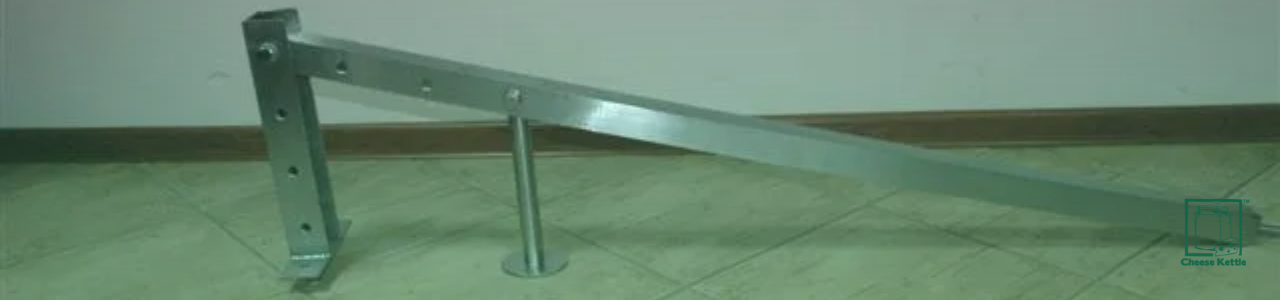
Our Cheese Kettle Cheese Making Press for Any Size Cheesemaker Sizing
We build the Cheese Kettle Cheese Making Press for Any Size Cheesemaker to order for pressed cheese production. Its applied load is selected for your mould size, with wall or tabletop mounting to suit the available pressing area.
Contact us to order a Cheese Making Press for Any Size Cheesemaker sized around your mould range and production volume.
Cheese Press Capacity Questions
Load | Does Extra Press Capacity Mean Using More Pressure?
Extra cheese press capacity does not mean using more pressure or extra weight. Set the applied load from your cheese recipe and mould size, using less weight where the recipe calls for less pressure and keeping unused capacity ready for larger moulds or more positions.
Moulds | Can I Stack Moulds to Increase Press Capacity?
Stack moulds only where the press setup keeps the load straight and each mould remains evenly supported. Include the full stack height, follower and combined weight when checking whether the press has enough capacity for that pressing method.
Cleaning | Should I Use Warm Water After Pressing Cheese?
Use warm water during your normal wash method where your cleaning instructions call for it. Keep a bucket ready to catch whey and clean the press before residue dries so it is ready for the next good cheese make.