

Monterey Jack cheese moisture is controlled long before the cheese enters the press. How you stir the curds, wash them and apply pressure determines whether the finished cheese has a smooth body, mild flavour and clean slice or becomes too soft, too firm or uneven. For makers using pasteurized cow’s milk or fresh cow’s milk, moisture control is a practical part of every make. It helps produce a mild cheese with the buttery flavour, white colour and dependable melt people expect from Monterey Jack.
Why Does Monterey Jack Cheese Need Moisture Control?
Monterey Jack is a semi-soft white cheese with a mild flavour and smooth texture. It should feel firm enough to slice for sandwiches, recipes and a cheese table, yet soft enough to melt well over nachos, meat or other food. Too much moisture can leave the cheese weak, overly soft or difficult to handle after ageing. Too little moisture can create a dry, hard body that loses the gentle, buttery flavour and flexible texture that make Monterey Jack popular. Monterey Jack is often made as wheels and aged for a relatively short period, although aged Monterey Jack and Dry Jack are firmer versions. Each version starts with the same basic need: control how much whey leaves the curds during making.
How Does Stirring Affect the Curds?
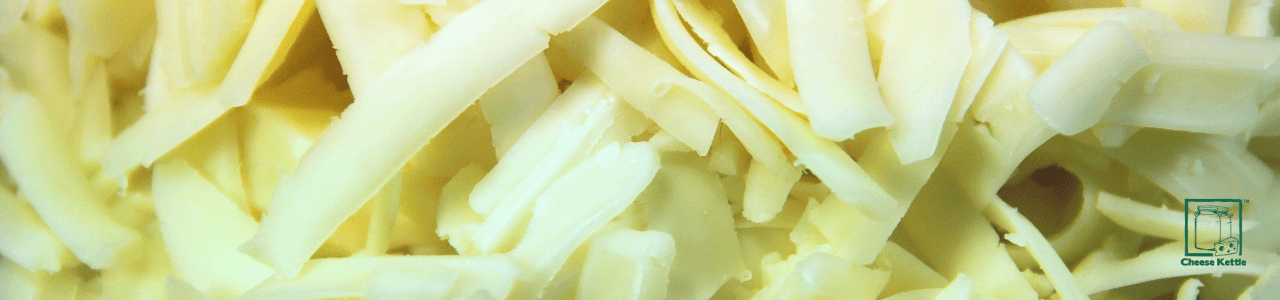
Stirring helps the curds release whey after the milk has set and been cut. Gentle, regular stirring keeps curds apart, supports even heating and helps each piece lose moisture at a similar pace. If stirring is too rough, the curds can break into small pieces and lose more fat and moisture than intended. If it is too light or irregular, curds may clump together, hold whey in patches and produce an uneven cheese texture. For better control, focus on these simple habits:
Cut curds to a consistent size before stirring.
Start slowly while the curds are still delicate.
Keep the movement steady rather than fast.
Stir across the whole vat, including the edges and base.
Watch the curds as they become firmer and smaller.
Record stirring time for each batch.
A CheeseKettle Cheese Harp can help create more even curds because it is made to suit the vat dimensions. Even curd size gives you a more consistent starting point before washing and pressing.

What Does Curd Washing Change?
Monterey Jack is a washed-curd cheese, meaning some whey is removed and replaced with water during making. This step cools the curds, reduces the amount of milk sugar left behind and helps keep the final cheese mild rather than sharp. The water temperature matters because it affects how quickly the curds continue releasing whey. Colder water generally keeps the curds softer and moister, while warmer water encourages a firmer body. Use curd washing to guide the final result:
Use a cooler wash when the curds appear to be drying too quickly.
Use a slightly warmer wash when the cheese is repeatedly too soft.
Add wash water gradually while stirring gently.
Keep curds moving so the temperature is even throughout the vat.
Drain carefully after washing rather than rushing into moulding.
The goal is not to make Monterey Jack wet. It is to leave enough moisture for a smooth, mild cheese that slices well and still has a good melt. Curd washing is one reason Monterey Jack is a good substitute for other mild cheeses in many recipes. It gives the cheese a mellow flavour that works with vegetables, meat, sauces and simple family food without overpowering other ingredients.
How Does Pressing Shape Final Texture?
Pressing brings the curds together into a solid wheel and removes the last free whey. It also helps create the smooth, closed body needed for neat slices, even ageing and a better appearance when the cheese is sold. Pressure should be built gradually. Heavy pressure too early can compact the outer layer before moisture can move from the centre, while too little pressure can leave gaps in the cheese. A practical pressing routine includes:
Fill moulds evenly with drained curds.
Begin with light pressure to help curds settle.
Turn the cheese at planned intervals.
Increase pressure as the curds knit together.
Check for a smooth surface and minimal open spaces.
Chill and store the finished cheese in the fridge as required.
A CheeseKettle Cheese Making Press (Custom Sizes) provides consistent pressure for different mould sizes. For larger production, the Commercial Mechanical Gravity Cheese Press allows makers to press multiple cheeses with adjustable pressure.

Common Monterey Jack Texture Problems
Texture problems usually begin earlier than the final press. Reviewing the whole make, from milk and curd cutting through to washing and moulding, will be more helpful than changing one pressing step without checking the rest.
The story of Monterey Jack begins in California, where early versions were made around present-day San Diego and Monterey during the mission era. David Jack later helped popularise a version of the cheese, and the name “Jack” became associated with this mild California cheese. Today, Monterey Jack, Pepper Jack, aged Monterey Jack and Dry Jack are enjoyed around the world. The origin may be historic, but the making principles remain practical: careful curd handling, controlled moisture and a consistent process.
What Equipment Helps Keep Results Consistent?
As production grows, keeping the same result across batches becomes harder. Temperature, stirring speed, curd size and pressing pressure all need attention, especially when making several wheels in one day; this is a practical fact for Monterey Jack, cheddar and other kinds of cheese. In addition to good records, equipment should suit the batch size, available power and the space on your production floor. This helps established businesses and newer makers produce cheese consistently over the years, rather than relying on changes in handling between staff, shifts or generations.
Production need | Relevant CheeseKettle equipment | How it helps |
|---|---|---|
Even curd handling | 200 Ltr Cheese Making Kettle Vat | Provides agitation capability and temperature controls during cheese making |
Standard power access | 240V Single Phase Cheese Vat | Works with standard household electrical service for rural or smaller operations |
Even curd size | Cheese Harp | Supports consistent curd cutting before stirring and washing |
Repeatable pressure | Cheese Making Press (Custom Sizes) | Applies pressure suited to different mould sizes |
The 200 Ltr Cheese Making Kettle Vat is a relevant option for medium-scale makers because it includes agitation capability and precise temperature controls. Its jacketed heating system helps maintain an even temperature during curd handling, which can support a more consistent Monterey Jack make. For rural makers or smaller operations without three-phase power, the 240V Single Phase Cheese Vat may also be suitable. It works with standard household electrical service and offers similar vat features for cheese making. Equipment does not replace careful attention to the make. It gives the maker a more consistent starting point for stirring, washing and pressing, whether the cheese is sold directly to guests, supplied to food businesses or prepared for a shopping range with a clear label.
A Simple Plan for Better Monterey Jack
Good Monterey Jack texture comes from treating stirring, washing and pressing as one process. Stir gently enough to protect curds, wash with purpose to guide moisture and flavour, then press gradually to create a smooth, firm body. Keep a batch record that includes milk type, curd size, stirring time, wash temperature, drain time, press schedule and final texture. Over several makes, this record can show which changes produce the mild, smooth Monterey Jack cheese you want, and which terms or measurements should remain the same.
Use the record as a working page for each batch. Note the date, such as February production, the cheese version, the equipment used, whether extra ingredients were added, and any changes that may enhance or reduce the final result. The history of Jack cheese reaches back decades to California, where it became an established cheese style through the work of local makers. Details such as the second mission, land, York, payments made or paid, and names used in older accounts are part of the broader story, but they do not change the practical process needed to make Monterey Jack today.
Ready to improve your cheese making process? Contact CheeseKettle to discuss the 200 Ltr Cheese Making Kettle Vat, Cheese Harp or Cheese Making Press (Custom Sizes) for more consistent curds, moisture control and finished wheels.