

Choose cheese harp wire spacing from the curd size your cheese recipe requires. Closer wire spacing produces a smaller first cut, while wider spacing leaves larger curd pieces. Matching the spacing to the intended curd size reduces unnecessary cutting. Fewer passes with the curd cutter help keep fragile curd from breaking into fines and carrying fat into whey. That protects yield and gives you an evener batch.
Wrong Wire Spacing Creates More Curd Fines and Fat Loss
Wrong cheese harp wire spacing creates either an over-small first cut or large pieces that need repeated cutting. Both increase handling time when fresh curd is easiest to damage. Curd should be cut into equal-sized pieces, while whey naturally carries some fat. Fines leaving the vat with whey add avoidable solids to that loss and give you a clear problem to review.
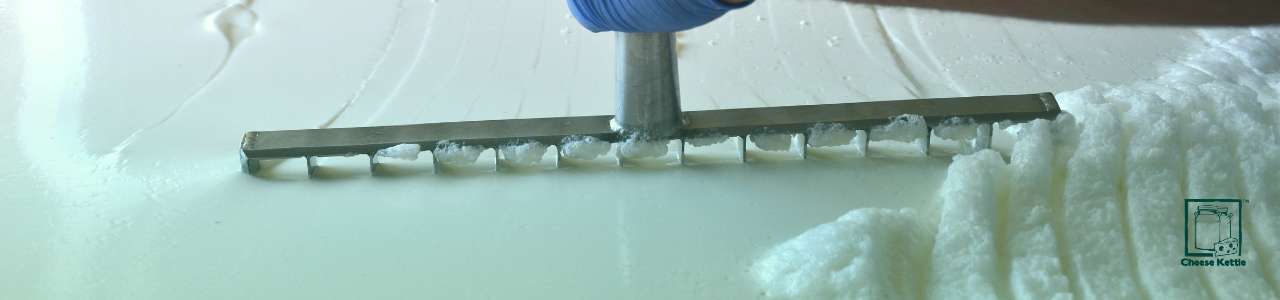
Wire Spacing Should Match Your Target Curd Size
Cheese harp wire spacing should match the target curd size on your make sheet. Choose spacing close to that size, then use the opposing cutter direction to complete the cube.
Cheese Style | Wire Spacing Approach |
|---|---|
Camembert and Brie | Use wider spacing for a larger, gentler curd cut |
Cheddar, Gouda, Reblochon and Tomme | Use closer spacing where the recipe calls for smaller curd |
Swiss and Parmesan | Select closer spacing when the make requires small curd pieces |
These are starting points, not fixed spacing numbers. Your cheese recipe and required curd size provide the information needed to decide the actual spacing.
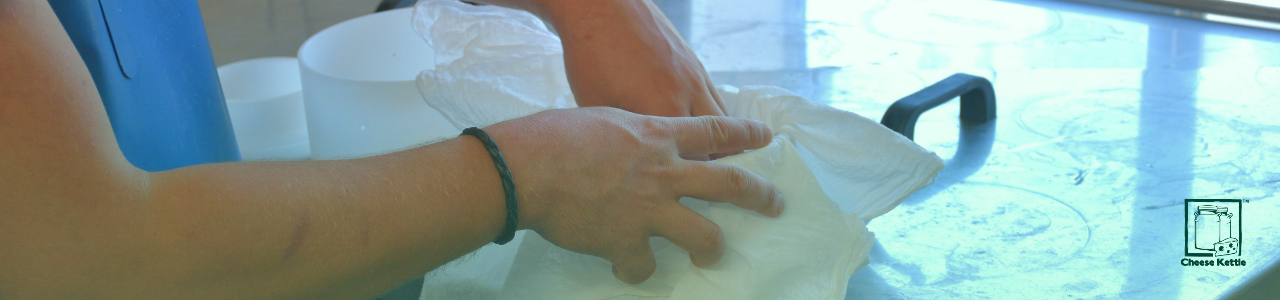
Wire Spacing Should Reduce Repeat Cutting
Cheese harp wire spacing should minimise the cutting passes needed to reach the required curd size. Wide spacing leaves large pieces; close spacing cuts fragile curd smaller than intended.
Make the first cut with steady, complete passes.
If smaller curd is required, let the curd settle for a few minutes.
Stir gently, then cut again only until the required size is reached.
The short rest gives the curd time to shrink and firm before later cuts. Firmer curd is less likely to crush or break apart during the next pass.

Harp Fit and Wire Condition Protect a Clean Cut
Cheese harp fit and wire condition matter because correct spacing only works when every wire passes cleanly through the curd. A curd cutter shaped for the vat or pot reduces missed curd and repeated cutting near the sides.
Check before each make:
wires are straight and evenly positioned
the frame reaches the working depth and width of the vat
the harp clears fittings and the vat edge
no dried curd is stuck to the wires

Our Cheese Kettle Cheese Harp for Cleaner Curd Cuts
We build the Cheese Kettle Cheese Harp to order for your vat and required curd cut in Australia. Its stainless-steel frame and wires use spacing selected for the cut you need. The frame can also match vat dimensions for closer coverage and less overcutting.
Contact us to order a Cheese Harp with wire spacing matched to the curd sizes you make.
Questions About Cheese Harps
Cleaning | How Do I Clean a Cheese Harp After Cutting?
Clean the cheese harp soon after cutting so curd does not dry onto the frame or wires. Pay close attention to each wire and the points where the wires meet the frame.
Sizing | Can A Cheese Harp Be Made to Fit My Vat?
A cheese harp can be sized to match the dimensions and profile of your vat. A closer fit helps the cutter reach the curd near the sides without extra cutting passes.