
A curd cutter improves uniformity when cutter selection and cutting technique work together. Match the tool to the target cheese curd size, wait for a clean set, and use smooth planned passes. This keeps more curd near the same size and reduces small broken fragments in the whey. Uniform curd gives you more consistent whey release during the rest of the cheese making process.
Curd Cutter Type Should Match Vat Shape and Cut Pattern
The curd cutter type should suit your vat shape, width, length and the cuts needed to form even pieces. A cutter that cannot reach the base, center or wall leaves oversized cheese curd that needs extra handling.
Cutter setup | Suits | What to watch |
|---|---|---|
Long curd knife | Small pot sizes and short vats | Hand spacing varies between passes, especially on horizontal cuts |
Parallel stainless wire frame | Repeated straight cuts | Frame width and max depth must suit the working area of the vat |
Vertical and horizontal curd cutter pair | Defined cuts in opposing directions | Both tools need clear travel through all the curd |
The cutter frame should travel freely through the whole working depth without forcing you to twist or rotate it. In a round pot or vat, check its diameter and clearance around agitators, probes and outlet fittings before the milk sets.
Curd Cutter Spacing Should Match Your Target Curd Size
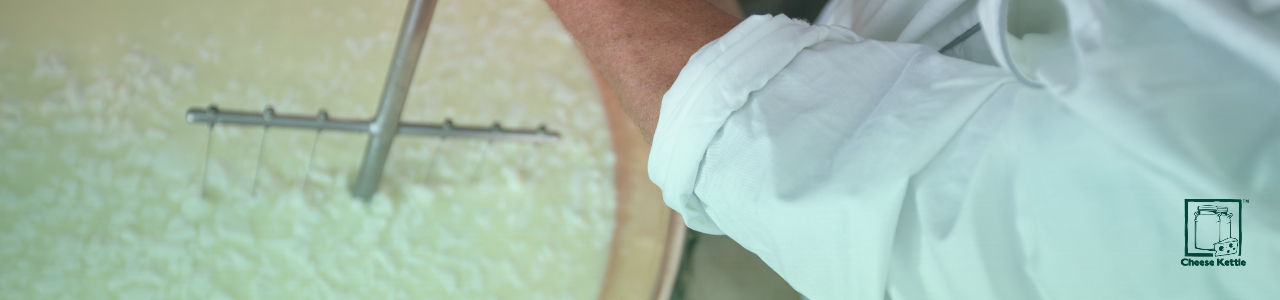
Curd cutter spacing should come from the target curd size in your make sheet or recipes. Closer spacing makes smaller first pieces, while wider spacing leaves larger pieces for cheese styles that retain more moisture.
Target result | Cutter choice |
|---|---|
Larger curd pieces | Wider spacing with fewer cutting passes |
Smaller curd pieces | Closer spacing once the curd is firm enough to cut cleanly |
Several cheese styles in one vat | A defined cutter and spacing choice for each make sheet |
Using fine spacing on soft curd creates many fresh cut faces at once. Using wide spacing and then repeating cuts to chase size adds handling after the first cut and increases tearing. Keep the cutter choice consistent between repeat makes unless you deliberately change the make sheet.
Curd Firmness Must Be Checked Before the First Cut
Curd firmness must be checked before the curd cutter enters the vat. A clean break shows that the cheese curd is ready to split along a cut instead of smearing around the knife or cutter.
Insert a clean curd knife into the curd at an angle.
Lift a small section on the side of the knife.
Look for a clean split around the knife.
Check that whey flows into the opening.
If the break is ragged or soft, wait until your make instructions call for another check.
Use the clean-break check at the expected cutting point in your make sheet. Cutting curd by hours or time alone is a bad idea because it gives no direct check of how the curd will respond.
Curd Cutter Passes Should Be Straight And Full Depth
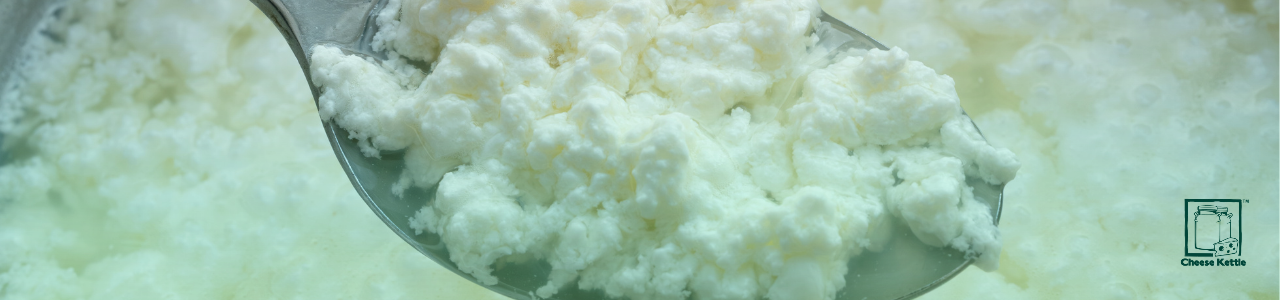
The curd cutter should move through the set curd with one steady, straight stroke. Keep the cutter upright so each stainless steel wire follows the same path from surface to base.
Lower the cutter gently into position near the starting side.
Move through the curd at a steady pace without sawing or spinning the cutter.
Complete the whole cut before lifting the cutter.
Make the next pass at the planned spacing or mark.
Cross the first cutting direction only after the first pattern is complete.
With a curd knife, one series of vertical cuts is followed by a perpendicular series and then angled cuts for the horizontal plane. The same idea applies to wire tools: plan the horizontal cuts and complete each pass cleanly through the whole thing.
Curd Cutter Re-Cutting Should Be Limited and Staged
Curd cutter re-cutting should stop once the curd reaches the target size range. Give freshly cut curd the rest your make sheet calls for before stirring or another cutting stage.
Fresh cut edges are fragile, so unnecessary movement breaks good pieces while you chase a few large ones. If the whole batch contains only a small quantity of oversized pieces, cut those pieces with the least extra disturbance.
Re-cut obvious large pieces instead of passing through the whole vat by default
Keep the second pass slow enough to see how the curd is responding
Stop once the quantity of curd sits close to the target size range
Record repeated oversize areas so you can correct the first cutting pattern next time
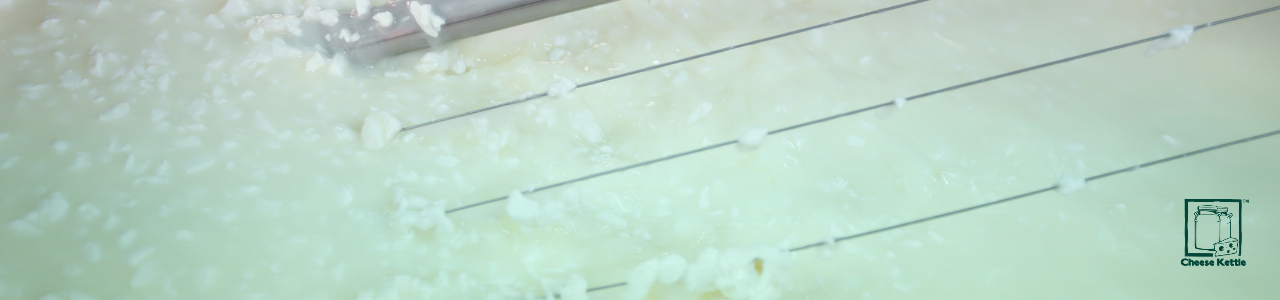
Curd Cutter Wires Must Stay Clean and Correctly Positioned
Curd cutter wires need to be clean, straight and correctly positioned before they enter the vat. Dried curd, bent stainless steel wire, poor tension or loose wire position changes the cutting path and adds drag through soft curd.
Check the cutter before each make:
Each wire sits in its intended position with even tension
No dried curd or residue remains on the stainless-steel wires or frame
The frame is straight and the handle connection is secure
No damaged wire, thread or connection can shift during the cut
The cutter has been cleaned with the correct brush where needed and sanitised under your documented cleaning procedure
Food-contact equipment used for dairy products must be kept clean and sanitary under Standard 3.2.2 from Food Standards Australia New Zealand. Cleaning removes residue and helps control bacteria; sanitising is a separate step after cleaning.
Curd Uniformity Should Be Checked Across the Whole Vat
Curd uniformity should be checked across the whole vat before stirring begins. Look at pieces near the centre, wall and base, because missed cutting zones leave larger sections in the middle or around the edge.
Use a quick visual check after the planned cuts:
Most pieces sit close to the target size in your make sheet
No long slabs remain against the vat wall
No large block remains near the base
Fine curd fragments are not building up through repeated cutting
The cutter has reached every planned section of the vat
Record the cutter, cutting pattern and any missed zones in the make sheet. If the same area stays oversized each batch, adjust cutter fit or cutting directions before changing the recipe.
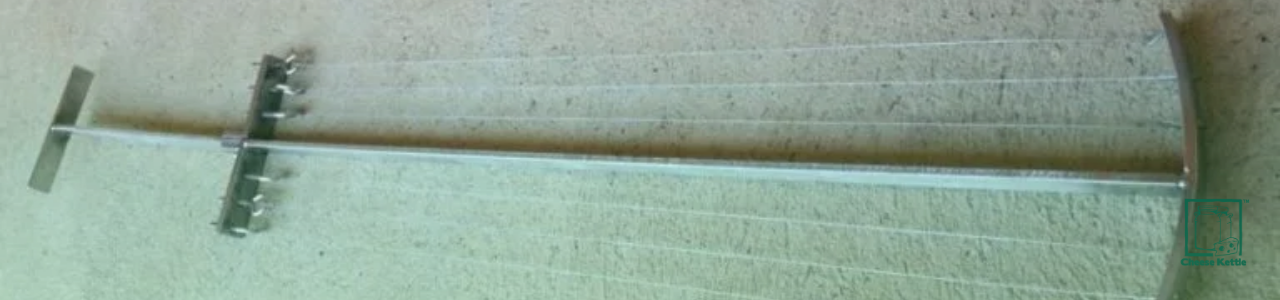
Our Cheese Kettle Swiss Style Cheese Curd Cutter for Uniform Curd
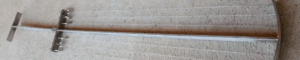
We build the Cheese Kettle Swiss Style Cheese Curd Cutter to order for manual curd cutting. Its 600 mm cutting section carries six special stainless-steel wires, giving you the same wire layout and cutting width on every pass.
Contact us to order a Swiss Style Cheese Curd Cutter for your curd-cutting setup.
Questions About Curd Cutter Technique
Curd Cutter | Should I Cut Faster When the Curd Is Firm?
The curd cutter should still move at a steady, controlled pace when the curd feels firm. Extra speed adds force to cheese curd that has already been cut and moved once.
Curd Cutter | What If the Curd Sticks to the Wires?
Stop and check the curd cutter wires for residue, position, tension and curd softness before pulling harder. Avoid replacing proper stainless wire with fishing line, string, wood or a dowel, because an improvised cutter changes how the cut travels through the curd.
Curd Cutter | Can I Cut Half the Vat Before Finishing the Rest?
Cutting half the vat first is workable only when your cheesemaking instructions call for that pattern. Keep the cutter path consistent so the curd does not finish as two pieces with different size and quality.
Curd Cutter | Does Putting More Pressure on the Cutter Improve the Cut?
Putting more pressure on the curd cutter does not improve a clean cut. Use steady movement through the curd so the wires separate it without crushing the edges.